Here A.I. stands for "augmenting imagination"
There is no shortage of strong opinions on artificial intelligence these days, especially in the creative world. One person’s “this is amazing” is another’s “this is going to replace us.” And then there are the ethical debates over whether using AI means losing authenticity and humanity, most recently seen in the controversy over how AI audio tools were employed in the film The Brutalist to improve the Hungarian accents of the lead actors.
At Adams & Knight, especially within the creative department, we’re no stranger to these debates — we’ve been informally having them ourselves for the past couple of years. And the push and pull and trial and error has led to how we’re currently using AI: not replacing anyone’s creativity or skills, but enhancing them, allowing us to do more than we ever have.
Better envisioning the end results.
One way we’ve used AI right from the start: helping both ourselves and our clients better envision concepts that ultimately are created without AI. Before the director’s boards…before the test shoots…and before the final photo shoot or filming, AI-created images are a great way to help everyone involved better picture what the final results may look like. And just like any tool or technology, that involves learning how to use it, through well-crafted prompts. (But that’s an article for another day.)
Improving and innovating existing assets.
When it comes to the final creative product, we actually use AI more for removing elements than creating or adding them. AI tools within programs like Photoshop have been invaluable time savers, enabling us to erase or change unwanted distractions in photos. It’s something we could have done before, but what would have taken hours with “traditional” methods now takes only seconds or minutes…letting us spend more time being creative in other ways. Another bonus: When the budget dictates using stock rather than original photography, AI now allows us to quickly change those visuals and make them more unique to our project and client.
Bringing the impossible to life.
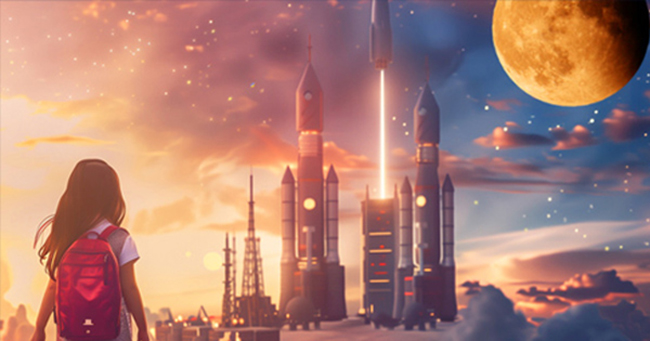
In just a couple cases so far, we’ve used AI-generated images and animations in the final deliverable, for the simple reason that they allowed us to create fantastical, otherworldly visuals that wouldn’t have been possible otherwise, at least for the time and budget we had. And even then, the AI imagery was secondary to the main focus of the creative — human actors who delivered the true emotional impact of the campaign. Even the best AI is still only a shallow, uncanny valley reflection of true human depth and emotion.
It’s not the end of the world. Just a different one.
Artificial intelligence is powerful, game-changing technology that’s opening up new worlds of creativity, and it certainly deserves the scrutiny and skepticism it’s drawing. But ultimately, at least in our field, I think it’s going to be less destructive and more constructive — just like other industry disrupters that have come along, like Photoshop, CGI, digital video editing and more. We just need to make sure we’re using it wisely and responsibly.
![[author photo]](https://adamsknight.com/images/people/circle-dugan.png)
